Welcome
Hi i'm Dweller, and i'm building this site because like you, I hate the internet now and I decided to become cringe as a response. This page is under construction and not very fleshed out yet.About me:
- I am a massive misanthrope.
- Computer games are my main passion, particularly older ones for the PC.
- I am currently developing an early 90s style game.
- I collect big box PC games.
- I keep a youtube channel as a journal of game environments.
- I like military history, and collect reference books on the Napoleonic Wars, World War 2 and the Cold War.
- I play dungeons and dragons semi-regularly.
- I'm teaching myself traditional illustration.
- I'm re-encouraging my writing habit by writing journals and essays.
- My favourite fiction books are The Hobbit and Catch-22.
- I like graphic novels. Frank Miller in particular.
- I like anime, particularly cyberpunk and fantasy ones.
- I love animals, and I own a cat.
- I like Britpop. My favourite band is Radiohead.
- I like to cook. My favourite food is pasta.
- My favourite film is Star Wars.
- I used to joke about liking Vtubers until it eventually stopped being a joke.
Projects
I'll put links to the pages i'm building for my games here as I finish them. Check back soon.PC Game Collection
I'll post a new game in my collection here every few days or when I remember. I'll also add a list of games I'm hoping to eventually collect.Collected Games
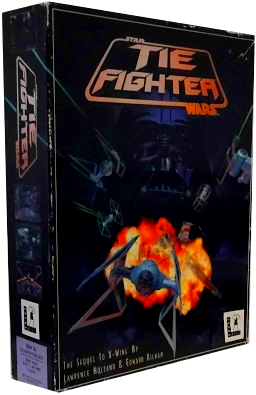
Games I'd like to collect:
- Half-Life.
- Warcraft 2.
- A copy of Diablo that's in better condition.
- Planescape Torment.
- Descent.
My Cat
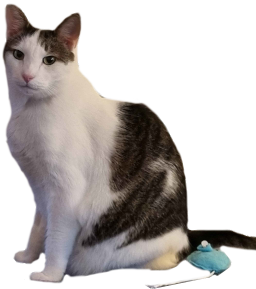 There he is.
Web 1.0 Aesthetics
When I decided to escape the walled-garden and have a more minimalist online presence; one that gave me more authorship and capacity for expression, I did research. Neocities is generally top of the list unless you're trying to build a professional page as a business card.The primary audience for this sort of thing are artists using their page as an kind of portfolio piece. There are a lot of videos on youtube urging creative people to turn to sites like Neocities or building and self-hosting a site as a means for self-expression outside of twitter/bluesky or youtube. The irony is of course that they had to go to youtube to say this because that's where the eyeballs actually are.
I think a lot of people are coming here as a means of making joy for themselves or making joy for other people; but in a practical/professional sense, this is something you direct people to, rather than from.
I don't have ANY kind of expectations any more in terms of exposure or professional development or monetary gain in a creative sense. I have tried that once and I want to burn that whole dog and pony show down along with everyone in it.
Nowerdays, I just want to make things that make me happy in my little hovel in the woods, occasionally leaving them by the forest's edge to see if anyone is foolish enough to touch the cursed trinkets I leave there.
I have enjoyed looking at other people's sites for inspriation, and a lot of them are very creative and very humbling in how well constructed they are and how well they use web 1.0 conventions as an artistic medium.
I do have some observations. I think that web 1.0 design is a bit like film noir in the sense that well-known tropes about the style are actually the product of continued parody rather than the historical style itself.
If you only knew film noir from references to it, then you'd assume every one features a detective's office, venetian blinds, femme fatales, a monologue voiceover, sunsets in LA, and so on and so forth. In reality, perhaps only a handful of films (Double-Indemnity is generally cited) feature EVERY example of every trope.
Modern examples of web 1.0 design tend to be very maximal in their expression of the style. Lots of animated gifs, a page counter, a guestbook, loud backgrounds, forum badges, music, so on and so forth.
The elephant begging to be addressed here is that the end goal for a lot of these pages isn't to historically emulate how webpages were- they are not museum pieces- but I feel they were intended to be looked at rather than used. They're modern webcore/oldweb/Y2k futurist/fruitiger aero distillations of web 1.0 as a medium for sculpture.
I am curious how much emulated web 1.0 design is intentionally ironic in turning every aspect up to 11, and how many are the product of flanderization. This might have been caused by geocities pages in the mid to late 2000s gradually becoming a more elaborate and maximal pastiche of mid to late 90s web design- with the imitation of that style becoming cemented as 'typical of the 90s and 2000s' during the 2010s and 2020s, when fewer people had first-hand experience of the pre web 2.0 internet.
I have some examples: here and here, of some sites from the late 90s and early 2000s that have been more or less maitained as they were. Like film noir, each of them contains at least one web-design trope from the time, but by and large they're pretty simple (from the user's perspective), functional sites, and don't bombard you visually.
I think there's and something appreciable about less is more; I am inclined to read pages that have a clarity of purpose to them- though I am contiually awed by other people's more-is-more-actually approach too, and it's pretty likely my page will take on some of those trends as I learn over time.
Low-Stakes Fantasy
I recently started playing vanilla Classic World of Warcraft again after trying Classic Burning Crusade for the second time. I have some very fond memories of playing Burning Crusade and Wrath of the Lich King back when they were new; but i've been thoroughly convinced that the vanilla version of the game is the definitive one.Vanilla has, both mechanically and narratively, a strong feeling of disempowerment. You go from feeling very weak to being marginally less weak, to somewhat capable (with help) during your travels. People often say that Burning Crusade "fixed" a lot of problems with class design in vanilla, that made playing some classes unviable in a competitive setting. I think that not only having some classes having some inherent flaws was actually more interesting from a design point of view- but from a thematic one as well. I won't attempt to touch on every mechanical aspect of World of Warcraft's design here because that's a book right there, but i'll talk briefly about how it interweaves thematically.
Vanilla feels a lot closer to what an MMO should be in terms of population. There is no expansion continent where all the characters over level 60 are hanging out. There's a much more even distribution of people throughout the world- even if a lot of those level capped characters are just farming or travelling to or from raids. Otherwise, people are generally taking their time more. 1-60 (for most people) is the eventual, inevitable summit of a winding game-long mountain path. 60-70 by comparison is an unpleasant uphill race to get to endgame dungeons. It's where the game first started to feel like content. In a logistical sense as well, BC tends to move you from one quest hub to another in a much more planned sense of progression. Vanilla has semi-plannedness that does breadcrumb to potential new horizons, but ultimately you're more encouraged to wander and explore the whole world.
It's from this sense of ongoing continual struggle and gradual improvement that makes the original game addictive. Narratively, vanilla deals with much more local problems, that gradually escalate throughout the 1-60 journey into regional ones. You'll start out fighting gnolls, then you'll move to bandits, then to local warlords, and eventually unravelling an Azeroth-wide conspiracy involving dragons; one that ties back into many of the disconnected plotlines you've already been involved in.
Future expansions would tackle global or cosmic catastrophies that would leave little room for this sense of growth. What sets sword and sorcery apart from high fantasy or epic fantasy is not only that the stories tend to be more constrained and personal, but they also tend to be about a person gradually overcoming nature- that nature being either literal, physical nature or some psychological aspect of the human condition. This is what more closely connects sword and sorcery with pulp speculative fiction, rather than its Tolkienian cousins, which, to very broadly generalize; this is a contested topic to say the least, tend to practice more of a historical romanticism.
Which is not to say that the Warcraft games are not Tolkienian, they absolutely are- but vanilla World of Warcraft, in my opinion, comes the closest to the sword and sorcery dungeons and dragons games played by Blizzard developers during their early years, which would go on to inspire so much of their back-catalogue. You are far more of a Conan than an Aragorn when you're playing these games. You travel to Scarlet Monastery to go get a book for a questgiver becasue he's going to pay you, and there might be good loot there, not because you're the lost heir to a fallen kingdom.
Furthermore, this kind of cynicism carries over to the wider story- a lot of the threats hinted at in vanilla, are never fully confronted or eliminated. There are seeds of various narratives sown everywhere, but not every thread is tied up by the game's end. Killing Sauron does not end all evil in the land, instead it sits and waits like a coiled narrative spring waiting for some future adventure to find the dark hole it's hiding in. This brings a great sense of tension as you are never told the complete story or context of your impact on the world. It's not your problem though, it's about your personal journey. You are just one character with tangential involvement in a wider plot.
The "broken" class design in some ways (perhaps unintentionally) gives you a greater sense of your place in context of the world and other players. Traditionally (though this might have changed with a newer playerbase) if you played a druid, it meant you were consigned to a supporting role in endgame raids. Rather than looking at this as a problem, I think actually it makes the game better. Knowing that you are going to be individually weak in some situations not only makes a it a better MMO with a greater need for overlapping roles and synergies- I think also it also narratively, from a roleplaying point of view, keeps you aware of your limitations. It makes overcoming or bypassing those limitations much more rewarding. It shows you a cruel and indifferent world.
And of course, it makes camraderie, and overcoming those weaknesses, feel more satisfying as well; every Conan needs his Subotai (and you will often be the Subotai). You could argue that every dungeons and dragons party is basically the Fellowship of the Ring- and that's certainly what we were all emulating when we were playing the game in 2004 when we were running Blackrock Depths- but again, I think the fleeting friendship, mercenary nature of MMO interactions speaks more to pulp sword and sorcery. These are life-long comrades you've known for all of 20 minutes, and will drift out of your story just as quickly. You'll likely see them again further down the road.
Indie Games
So a few days ago I saw several videos about the challenges of indie game economics in 2026. Then I saw another about the fatigue that audiences are feeling about buying indie games. It made me want to start penning a few belligerently worded paragraphs about it. I have some thoughts on the subject as both a small-time developer and a consumer, and I can see it both sides.A lot of the indie space is people who have made (or commonly not made) games that you've not heard of, giving advice to other people who haven't made games you've not heard of, and then other other people who've made or not made games you've not heard of, commenting on the cottage industry that's sprung up to capitalize on the booming market for talking about not making games. Then consumers pipe up and say that all of this tiring and not worth $20.
Before I lose you: I don't really want to chew on a lot of well-teethed discussions about the value of indie games. I might revisit it in more granular detail later, but I'm very much over game industry discourse, creative discourse, indie game discourse. While I still feel strongly about those things, I chose to sit on those paragraphs a few days and see how I felt later, because my gut told me it was the wrong time. I'd much rather start this little site on a more positive note and leave the bitter parts out.
The thesis of that essay is that fundamentally, too many people are making games now. The real issue with indie games (or games in general) is one of shelf space, not the games, or influencers, or the industry itself per se.
Back in the 80s and 90s, one of the chief concerns among publishers and retailers was that brick-and-mortar shelf space was finite. Publishers, retailers and the games press essentially curated what ended up on shelves, what was marketed, and ultimately what you saw and what you bought.
When we moved to digital storefront, the shelves became virtually infinite. Your attention span though, is not infinite. It stopped being about winning physical space and started being more about winning your eyeballs. We thought this was great in 2010, because it meant the little guy could at least be on the same playing field as a big publisher so long as they could get eyes on what they were making.
Tastemakers, are and always have been, a crucial thing. Influencers, particularly streamers and youtubers, are make or break for small developers. Just like indie games itself, influencing is a very crowded market, which is also competing for your time. This is another high-investment barrier the consumer has to overcome. You have to find someone you trust enough to choose to spotlight things that won't waste your time.
Before, just as there were fewer games, so to were there fewer tastemakers. You were pretty much limited to print, not everyone was online, and the attitude of 'old' media like TV towards games was pretty inconsistent. Having fewer ways to find out about games, made making decisions about spending your time and money easier.
So is this a call for more gatekeeping from tastemakers for sake of the customer's comfort? It sounds a lot more dystopian when you put that way, so let's not put it that way. I think it's about finding a healthy compromise between developers needs as a creative industry and consumer's needs (which is also in said developers interest) need for a comprehensible marketplace. I don't think curating the curators is practical or the right answer.
I think the solution might actually be bespoke distribution. The change needs to come at the place people actually buy the games, and how that can be diversified, rather than how you get them there.
The issue I think is that even though the shop is gone, it's still fundamentally an abstract kind of space. That is the place where you actually hand over the money and make your choice. It's where you peruse what they have while you're in there. How that space is presented, who goes there, and how the shelves are sorted is very important.
Visiting steam isn't really like going to a shop, it's like going to a warehouse. Sure, it might have every game you could conceivably play there, but it's an overwhelming, unpleasant pile of mislabeled boxes. We let the customers set the taxonomy and we're surprised the nomenclature is unusable.
Unless you make it your business to pick through it (and I'm sure lots of people do), a lot of people are going to steam to buy something they already heard about and then not hanging about; possibly taking a look at what they've got out the front.
GoG used to be more useful as a storefront because it was reputable like Steam, but it also catered to a specific market and was a little picky about what it displayed on its shelfspace. Discussions about preservationism aside (and boy do I have some opinions on that, more later), GoG's distinctiveness as a space has kind of been diluted over time, as it's sought to bring in more paying demographics (presumably people that will pay to see tits). This is probably just the entropy of running a business. Despite my grievances, GoG fundamentally is one.
The end result though, from my point of view, is I no longer check GoG daily to see if they've added any new games to their library. I know now that most of it is not stuff I'll be interested in, and it's pretty rare now fore them to try to get games I am interested in. What would really comfort me as a consumer would be being able to visit a specific digital space and be presented a comprehensible number of games i'm likely to be interested in. What would comfort me as a developer would be knowing that I could tailor my game to that space, rather than seeing it lost in steam's infinite warehouse.
Visiting physical games stores used to be more like visiting a small bookshop. Because your outside knowledge of what was available was smaller, it used to be more novel to visit them. A lot more effort was put into how games were presented to you at the storefront, and the general experience of buying and installing the game. Those things have fallen by the wayside because ultimately, digital storefronts are more about being a safe and convenient delivery method.
I don't think it's good or viable to try to change the way consumers hear about games, but rather, by establishing your brand as a storefront that caters to a particular kind of customer, and encouraging them to go there specifically for a certain kind of game. Just as every clothing store doesn't sell every kind of clothing- perhaps every game store should not sell every kind of game.
The elephant in the room is, the financial viability of such businesses would be pretty questionable.
Developers, publishers and consumers all like steam because all the eyeballs are there, and eyeballs are good for business. Gamemakers reluctantly hand over that juicy 30% cut for just that reason. Consumers want to go to a storefront they trust, has a good track record of consumer protection, and offers a competitive price. A lot of developers are often (deliberately?) obtuse about why consumers are adverse to EGS, or at least used to be, perhaps we've mellowed on that one now. Brand loyalty matters to both parties and must be acknowledged.
So I don't have a complete business plan here, but something that would be healthy creatively and economically for indie games would be to diversify the way the audiences enjoy the complete holistic experience of finding, purchasing and playing their game- not just how they find out about it. This would help to reduce the growing fatigue among consumers.
Mute Buttons
The "do not recommend this channel" button is one of the greatest inventions in the history of the internet.I've talked a little bit about curation on the internet before, and this time it's specifically about curation of your own mental space. I'm a guy who takes mental hygiene and not having my time wasted very seriously.
If your site comes with some form of "get that shit out of my sight and don't ever let me see it again" button: congratulations; your website is useable in 2026.
Never give second chances, never give second guesses. If the thumbnail has obvious AI in it, hit the button. If the thumbnail has a wojak in it, hit the button. If the thumbnail has a guy with his mouth open pointing at something, that button is getting hit. "but dweller, maybe you should try to sort good things from bad things". Uh how about instead they work a little harder to be good things and until then, I let god sort them out.
The marie kondo approach to the internet is an insanely healthy one. There was this guy, a Japanese game developer, the guy that made Bayonetta; no I don't care, no I'm not looking him up. His approach on twitter was (is?) to block anyone who even breathed at him in a way that didn't bring him joy. Speak to him on English (he only speaks Japanese)? Block. Ask him a question that he doesn't feel like answering? Block. Tell him you liked his game? Block. Anything that causes him even the mildest of displeasure, he just blocks it. And I bet he's super fucking happy with that outlook.
People will attempt to steal your time and energy from you and then feign ignorance when confronted. A lot of time-wasting content dwells within the dark.... uh...crevices of our doubt. What if I mute a creator that might have otherwise good content? What if the thumbnail is just there to get my attention, but the actual video is good? What if a salient point lurks deep within this 2 hour essay that just re-iterates its thesis over and over again? It's those questions that they prey upon. Instead of doubt, just shoot them in the face and move on.
Being on the internet is like standing at the base of the Eiffel tower and letting thousands of trinket salesmen shout in your face. The block button is the pepper spray, it's the only defense you have. It's a vast ocean of content, and you will lose nothing by bailing a few bucketfuls of briney seawater out of your sinking cranial dingy.
I know a few of you are saying "well that's your prerogative, my guy, that was always a choice, you do you, nobody is stopping you, do you want a medal or something". To that I say, one, adopting this attitude in the extreme, like, complete recommendation genocide, is a pretty new to me, and pretty rad. Secondly, it's not a baseline for the whole internet, and we should be demanding it should be.
Sites don't want you to have this ability because their ability to put eyeballs in front of content and then learning what eyeballs go with what content is how they make their money. We kind of get sometimes as a conceit because otherwise, you guessed it, these sites would be fucking unusable and people wouldn't go there.
Don't want any of this dropdown nonsense, I want a big fat one-click button that will turn a field of time-wasting parasite content into a fucking algorithmic parking lot. Being the dictator of your own cerebral banana republic rocks and I will gladly put a trillion gallons of slop against the wall for a microsecond of comprehensible solace.
So I encourage you: always go nuclear, early and often. Words to live by.