Welcome
Hi i'm Dweller, and i'm building this site because like you, I hate the internet now and I decided to become cringe as a response.Last Update: 14/8/26. Updated the look of the site a bit. Mysterious low-poly gems are out and ominous pixel-art orbs are in. Caves, and dwelling in them, remains consistently fashionable.
About me:
- Computer games are my main passion, particularly older ones for the PC.
- I am currently an in-character journal of my DND campaign, set in Icewind Dale.
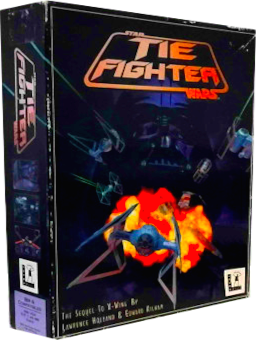
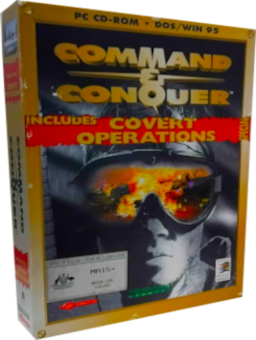
- I collect big box PC games.
- I keep a youtube channel as a journal of game environments.
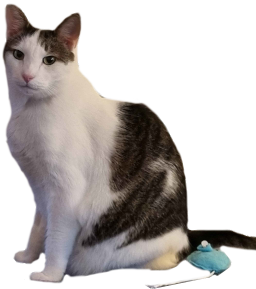
- I love animals, and I own a cat named Denton. There he is.
Projects
World-War 2 Sim Game
An early-90s style World-War 2 tank and aircraft sim I'm working on in my spare-time. 40+ playable vehicles, 4 factions, wave-based sandbox style missions. I'll link the page i'm building for it when I can actually settle on a name.D&D Campaign Journal
A journal i'm keeping to chart our party's progress through Icewind Dale: Rime of the Frostmaiden. Includes maps, logs, art.PC Game Collection
I'll post a new game in my collection here every few days or when I remember. I'll also add a list of games I'm hoping to eventually collect.Collected Games Shelf:
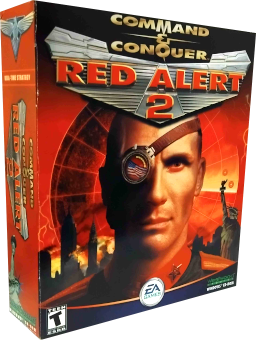
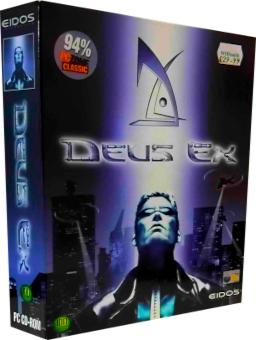
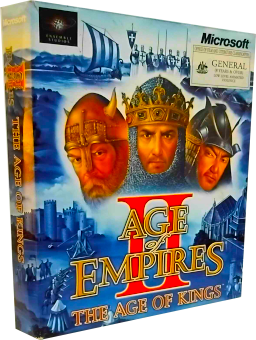
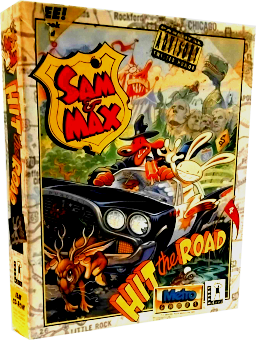
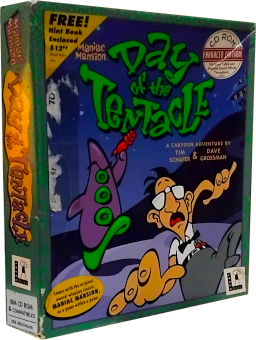

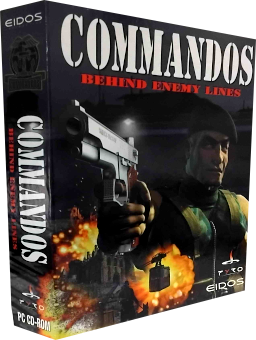
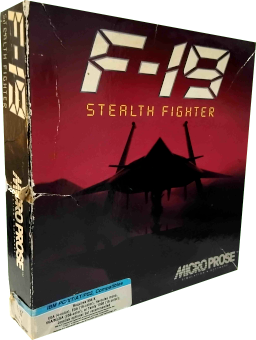
Games I'd like to collect:
- Half-Life.
- Warcraft 2.
- A copy of Diablo that's in better condition.
- Planescape Torment.
- Descent.
- Blade Runner.
- Star Wars: Rogue Squadron.
- Star Wars: Shadows of the Empire.
- Star Wars: Episode 1 - The Phantom Menace.
Under Construction.
Low-Effort Movie Reviews
Doctor Zhivago
I thought the story of a middle-class intellectuals quest to navigate the perils of Russian Revolution in order to cheat on his wife was inspiring. The ultimate bourgeois experience.Tinker, Tailor Soldier, Spy
Old man power fantasy. A retired Gary Oldman has 6 conversations where his gut is right about things, ends up finding a mole at MI6 while a twink does all the legwork. Colin Firth fucks Gary Oldman's wife.The Martian
Ridley Scott, reputed for this preference for visuals over performances, manages to blow the opportunity to make a movie with lots of cool visuals of Mars. Spend 2 hours waiting to see if a redditor makes it home alive. A story so tensionless it could be the front of a unuch's underpants.Low-Effort Game Reviews
SWAT 4
I'm not bullshitting you when I say that this game has more design lineage in its DNA from Thief than it does its contemporaries in tactical shooters. The squad-based police proceedure is the premise, but the crime-scenes and people you interlope and sometimes violently impose that proceedure on; those are what reel you in.I think it's a good example of a game in typically "dry" genre stepping into the "play that's already ended badly" school of storytelling dominated by more "serious" narrative-driven games. It has something to say but it knows when to pull its punches, it doesn't fall into the trap of being sordid for the sake of being sordid. Well worth your time if ambient environments are your thing.
Low-Effort Book Reviews
Dune Messiah
I found this one interesting because it really does read less like a self-contained sequel in it own right and more like a novella-long epilogue to the original Dune. A fourth act to that story. I understand this was the original intention to a degree. It definitely emphisizes the sense of tragedy in Paul's predicament as a prisoner of prescience as he essentially tries to find a way of killing himself that won't result in things getting even worse for everyone else in the known-universe.Web 1.0 Aesthetics
When I decided to escape the walled-garden and have a more minimalist online presence; one that gave me more authorship and capacity for expression, I did research. Neocities is generally top of the list unless you're trying to build a professional page as a business card.The primary audience for this sort of thing are artists using their page as an kind of portfolio piece. There are a lot of videos on youtube urging creative people to turn to sites like Neocities or building and self-hosting a site as a means for self-expression outside of twitter/bluesky or youtube. The irony is of course that they had to go to youtube to say this because that's where the eyeballs actually are.
I think a lot of people are coming here as a means of making joy for themselves or making joy for other people; but in a practical/professional sense, this is something you direct people to, rather than from.
I don't have ANY kind of expectations any more in terms of exposure or professional development or monetary gain in a creative sense. I have tried that once and I want to burn that whole dog and pony show down along with everyone in it.
Nowerdays, I just want to make things that make me happy in my little hovel in the woods, occasionally leaving them by the forest's edge to see if anyone is foolish enough to touch the cursed trinkets I leave there.
I have enjoyed looking at other people's sites for inspriation, and a lot of them are very creative and very humbling in how well constructed they are and how well they use web 1.0 conventions as an artistic medium.
I do have some observations. I think that web 1.0 design is a bit like film noir in the sense that well-known tropes about the style are actually the product of continued parody rather than the historical style itself.
If you only knew film noir from references to it, then you'd assume every one features a detective's office, venetian blinds, femme fatales, a monologue voiceover, sunsets in LA, and so on and so forth. In reality, perhaps only a handful of films (Double-Indemnity is generally cited) feature EVERY example of every trope.
Modern examples of web 1.0 design tend to be very maximal in their expression of the style. Lots of animated gifs, a page counter, a guestbook, loud backgrounds, forum badges, music, so on and so forth.
The elephant begging to be addressed here is that the end goal for a lot of these pages isn't to historically emulate how webpages were- they are not museum pieces- but I feel they were intended to be looked at rather than used. They're modern webcore/oldweb/Y2k futurist/fruitiger aero distillations of web 1.0 as a medium for sculpture.
I am curious how much emulated web 1.0 design is intentionally ironic in turning every aspect up to 11, and how many are the product of flanderization. This might have been caused by geocities pages in the mid to late 2000s gradually becoming a more elaborate and maximal pastiche of mid to late 90s web design- with the imitation of that style becoming cemented as 'typical of the 90s and 2000s' during the 2010s and 2020s, when fewer people had first-hand experience of the pre web 2.0 internet.
I have some examples: here and here, of some sites from the late 90s and early 2000s that have been more or less maitained as they were. Like film noir, each of them contains at least one web-design trope from the time, but by and large they're pretty simple (from the user's perspective), functional sites, and don't bombard you visually.
I think there's and something appreciable about less is more; I am inclined to read pages that have a clarity of purpose to them- though I am contiually awed by other people's more-is-more-actually approach too, and it's pretty likely my page will take on some of those trends as I learn over time.
Low-Stakes Fantasy
I recently started playing vanilla Classic World of Warcraft again after trying Classic Burning Crusade for the second time. I have some very fond memories of playing Burning Crusade and Wrath of the Lich King back when they were new; but i've been thoroughly convinced that the vanilla version of the game is the definitive one.Vanilla has, both mechanically and narratively, a strong feeling of disempowerment. You go from feeling very weak to being marginally less weak, to somewhat capable (with help) during your travels. People often say that Burning Crusade "fixed" a lot of problems with class design in vanilla, that made playing some classes unviable in a competitive setting. I think that not only having some classes having some inherent flaws was actually more interesting from a design point of view- but from a thematic one as well. I won't attempt to touch on every mechanical aspect of World of Warcraft's design here because that's a book right there, but i'll talk briefly about how it interweaves thematically.
Vanilla feels a lot closer to what an MMO should be in terms of population. There is no expansion continent where all the characters over level 60 are hanging out. There's a much more even distribution of people throughout the world- even if a lot of those level capped characters are just farming or travelling to or from raids. Otherwise, people are generally taking their time more. 1-60 (for most people) is the eventual, inevitable summit of a winding game-long mountain path. 60-70 by comparison is an unpleasant uphill race to get to endgame dungeons. It's where the game first started to feel like content. In a logistical sense as well, BC tends to move you from one quest hub to another in a much more planned sense of progression. Vanilla has semi-plannedness that does breadcrumb to potential new horizons, but ultimately you're more encouraged to wander and explore the whole world.
It's from this sense of ongoing continual struggle and gradual improvement that makes the original game addictive. Narratively, vanilla deals with much more local problems, that gradually escalate throughout the 1-60 journey into regional ones. You'll start out fighting gnolls, then you'll move to bandits, then to local warlords, and eventually unravelling an Azeroth-wide conspiracy involving dragons; one that ties back into many of the disconnected plotlines you've already been involved in.
Future expansions would tackle global or cosmic catastrophies that would leave little room for this sense of growth. What sets sword and sorcery apart from high fantasy or epic fantasy is not only that the stories tend to be more constrained and personal, but they also tend to be about a person gradually overcoming nature- that nature being either literal, physical nature or some psychological aspect of the human condition. This is what more closely connects sword and sorcery with pulp speculative fiction, rather than its Tolkienian cousins, which, to very broadly generalize; this is a contested topic to say the least, tend to practice more of a historical romanticism.
Which is not to say that the Warcraft games are not Tolkienian, they absolutely are- but vanilla World of Warcraft, in my opinion, comes the closest to the sword and sorcery dungeons and dragons games played by Blizzard developers during their early years, which would go on to inspire so much of their back-catalogue. You are far more of a Conan than an Aragorn when you're playing these games. You travel to Scarlet Monastery to go get a book for a questgiver becasue he's going to pay you, and there might be good loot there, not because you're the lost heir to a fallen kingdom.
Furthermore, this kind of cynicism carries over to the wider story- a lot of the threats hinted at in vanilla, are never fully confronted or eliminated. There are seeds of various narratives sown everywhere, but not every thread is tied up by the game's end. Killing Sauron does not end all evil in the land, instead it sits and waits like a coiled narrative spring waiting for some future adventure to find the dark hole it's hiding in. This brings a great sense of tension as you are never told the complete story or context of your impact on the world. It's not your problem though, it's about your personal journey. You are just one character with tangential involvement in a wider plot.
The "broken" class design in some ways (perhaps unintentionally) gives you a greater sense of your place in context of the world and other players. Traditionally (though this might have changed with a newer playerbase) if you played a druid, it meant you were consigned to a supporting role in endgame raids. Rather than looking at this as a problem, I think actually it makes the game better. Knowing that you are going to be individually weak in some situations not only makes a it a better MMO with a greater need for overlapping roles and synergies- I think also it also narratively, from a roleplaying point of view, keeps you aware of your limitations. It makes overcoming or bypassing those limitations much more rewarding. It shows you a cruel and indifferent world.
And of course, it makes camraderie, and overcoming those weaknesses, feel more satisfying as well; every Conan needs his Subotai (and you will often be the Subotai). You could argue that every dungeons and dragons party is basically the Fellowship of the Ring- and that's certainly what we were all emulating when we were playing the game in 2004 when we were running Blackrock Depths- but again, I think the fleeting friendship, mercenary nature of MMO interactions speaks more to pulp sword and sorcery. These are life-long comrades you've known for all of 20 minutes, and will drift out of your story just as quickly. You'll likely see them again further down the road.
Indie Games
So a few days ago I saw several videos about the challenges of indie game economics in 2026. Then I saw another about the fatigue that audiences are feeling about buying indie games. It made me want to start penning a few belligerently worded paragraphs about it. I have some thoughts on the subject as both a small-time developer and a consumer, and I can see it both sides.A lot of the indie space is people who have made (or commonly not made) games that you've not heard of, giving advice to other people who haven't made games you've not heard of, and then other other people who've made or not made games you've not heard of, commenting on the cottage industry that's sprung up to capitalize on the booming market for talking about not making games. Then consumers pipe up and say that all of this tiring and not worth $20.
Before I lose you: I don't really want to chew on a lot of well-teethed discussions about the value of indie games. I might revisit it in more granular detail later, but I'm very much over game industry discourse, creative discourse, indie game discourse. While I still feel strongly about those things, I chose to sit on those paragraphs a few days and see how I felt later, because my gut told me it was the wrong time. I'd much rather start this little site on a more positive note and leave the bitter parts out.
The thesis of that essay is that fundamentally, too many people are making games now. The real issue with indie games (or games in general) is one of shelf space, not the games, or influencers, or the industry itself per se.
Back in the 80s and 90s, one of the chief concerns among publishers and retailers was that brick-and-mortar shelf space was finite. Publishers, retailers and the games press essentially curated what ended up on shelves, what was marketed, and ultimately what you saw and what you bought.
When we moved to digital storefront, the shelves became virtually infinite. Your attention span though, is not infinite. It stopped being about winning physical space and started being more about winning your eyeballs. We thought this was great in 2010, because it meant the little guy could at least be on the same playing field as a big publisher so long as they could get eyes on what they were making.
Tastemakers, are and always have been, a crucial thing. Influencers, particularly streamers and youtubers, are make or break for small developers. Just like indie games itself, influencing is a very crowded market, which is also competing for your time. This is another high-investment barrier the consumer has to overcome. You have to find someone you trust enough to choose to spotlight things that won't waste your time.
Before, just as there were fewer games, so to were there fewer tastemakers. You were pretty much limited to print, not everyone was online, and the attitude of 'old' media like TV towards games was pretty inconsistent. Having fewer ways to find out about games, made making decisions about spending your time and money easier.
So is this a call for more gatekeeping from tastemakers for sake of the customer's comfort? It sounds a lot more dystopian when you put that way, so let's not put it that way. I think it's about finding a healthy compromise between developers needs as a creative industry and consumer's needs (which is also in said developers interest) need for a comprehensible marketplace. I don't think curating the curators is practical or the right answer.
I think the solution might actually be bespoke distribution. The change needs to come at the place people actually buy the games, and how that can be diversified, rather than how you get them there.
The issue I think is that even though the shop is gone, it's still fundamentally an abstract kind of space. That is the place where you actually hand over the money and make your choice. It's where you peruse what they have while you're in there. How that space is presented, who goes there, and how the shelves are sorted is very important.
Visiting steam isn't really like going to a shop, it's like going to a warehouse. Sure, it might have every game you could conceivably play there, but it's an overwhelming, unpleasant pile of mislabeled boxes. We let the customers set the taxonomy and we're surprised the nomenclature is unusable.
Unless you make it your business to pick through it (and I'm sure lots of people do), a lot of people are going to steam to buy something they already heard about and then not hanging about; possibly taking a look at what they've got out the front.
GoG used to be more useful as a storefront because it was reputable like Steam, but it also catered to a specific market and was a little picky about what it displayed on its shelfspace. Discussions about preservationism aside (and boy do I have some opinions on that, more later), GoG's distinctiveness as a space has kind of been diluted over time, as it's sought to bring in more paying demographics (presumably people that will pay to see tits). This is probably just the entropy of running a business. Despite my grievances, GoG fundamentally is one.
The end result though, from my point of view, is I no longer check GoG daily to see if they've added any new games to their library. I know now that most of it is not stuff I'll be interested in, and it's pretty rare now fore them to try to get games I am interested in. What would really comfort me as a consumer would be being able to visit a specific digital space and be presented a comprehensible number of games i'm likely to be interested in. What would comfort me as a developer would be knowing that I could tailor my game to that space, rather than seeing it lost in steam's infinite warehouse.
Visiting physical games stores used to be more like visiting a small bookshop. Because your outside knowledge of what was available was smaller, it used to be more novel to visit them. A lot more effort was put into how games were presented to you at the storefront, and the general experience of buying and installing the game. Those things have fallen by the wayside because ultimately, digital storefronts are more about being a safe and convenient delivery method.
I don't think it's good or viable to try to change the way consumers hear about games, but rather, by establishing your brand as a storefront that caters to a particular kind of customer, and encouraging them to go there specifically for a certain kind of game. Just as every clothing store doesn't sell every kind of clothing- perhaps every game store should not sell every kind of game.
The elephant in the room is, the financial viability of such businesses would be pretty questionable.
Developers, publishers and consumers all like steam because all the eyeballs are there, and eyeballs are good for business. Gamemakers reluctantly hand over that juicy 30% cut for just that reason. Consumers want to go to a storefront they trust, has a good track record of consumer protection, and offers a competitive price. A lot of developers are often (deliberately?) obtuse about why consumers are adverse to EGS, or at least used to be, perhaps we've mellowed on that one now. Brand loyalty matters to both parties and must be acknowledged.
So I don't have a complete business plan here, but something that would be healthy creatively and economically for indie games would be to diversify the way the audiences enjoy the complete holistic experience of finding, purchasing and playing their game- not just how they find out about it. This would help to reduce the growing fatigue among consumers.
Mute Buttons
The "do not recommend this channel" button is one of the greatest inventions in the history of the internet.I've talked a little bit about curation on the internet before, and this time it's specifically about curation of your own mental space. I'm a guy who takes mental hygiene and not having my time wasted very seriously.
If your site comes with some form of "get that shit out of my sight and don't ever let me see it again" button: congratulations; your website is useable in 2026.
Never give second chances, never give second guesses. If the thumbnail has obvious AI in it, hit the button. If the thumbnail has a wojak in it, hit the button. If the thumbnail has a guy with his mouth open pointing at something, that button is getting hit. "but dweller, maybe you should try to sort good things from bad things". Uh how about instead they work a little harder to be good things and until then, I let god sort them out.
The marie kondo approach to the internet is an insanely healthy one. There was this guy, a Japanese game developer, the guy that made Bayonetta; no I don't care, no I'm not looking him up. His approach on twitter was (is?) to block anyone who even breathed at him in a way that didn't bring him joy. Speak to him on English (he only speaks Japanese)? Block. Ask him a question that he doesn't feel like answering? Block. Tell him you liked his game? Block. Anything that causes him even the mildest of displeasure, he just blocks it. And I bet he's super fucking happy with that outlook.
People will attempt to steal your time and energy from you and then feign ignorance when confronted. A lot of time-wasting content dwells within the dark.... uh...crevices of our doubt. What if I mute a creator that might have otherwise good content? What if the thumbnail is just there to get my attention, but the actual video is good? What if a salient point lurks deep within this 2 hour essay that just re-iterates its thesis over and over again? It's those questions that they prey upon. Instead of doubt, just shoot them in the face and move on.
Being on the internet is like standing at the base of the Eiffel tower and letting thousands of trinket salesmen shout in your face. The block button is the pepper spray, it's the only defense you have. It's a vast ocean of content, and you will lose nothing by bailing a few bucketfuls of briney seawater out of your sinking cranial dingy.
I know a few of you are saying "well that's your prerogative, my guy, that was always a choice, you do you, nobody is stopping you, do you want a medal or something". To that I say, one, adopting this attitude in the extreme, like, complete recommendation genocide, is a pretty new to me, and pretty rad. Secondly, it's not a baseline for the whole internet, and we should be demanding it should be.
Sites don't want you to have this ability because their ability to put eyeballs in front of content and then learning what eyeballs go with what content is how they make their money. We kind of get sometimes as a conceit because otherwise, you guessed it, these sites would be fucking unusable and people wouldn't go there.
Don't want any of this dropdown nonsense, I want a big fat one-click button that will turn a field of time-wasting parasite content into a fucking algorithmic parking lot. Being the dictator of your own cerebral banana republic rocks and I will gladly put a trillion gallons of slop against the wall for a microsecond of comprehensible solace.
So I encourage you: always go nuclear, early and often. Words to live by.
Piracy
Something that has come to bother me is that sometimes people treat videogames as if they're unplayable unless they're on steam. Sometimes, people even get excited about games that have been widely avaliable on the internet and in perfect working order on modern systems for decades. Sometimes it's games that've even been on GOG for years.I feel like this kind of speaks to a wider trend of declining 'digital awareness' among a lot of people. There are three sort of conclusions you can draw from this: either that people simply didn't know about the games, didn't care to look for them, or it just wasn't fashionable to be seen playing them before now. I'm not sure if it's a lack of knowlege, a lack of ability or even a lack of inclination to look outside the internet's walled gardens.
Some companies have made a lot of money taking abandonware, making it not abandonware anymore and then charging 15 dollars for it. Don't get me wrong, I definitely don't think there's anything shameful about convenience as a selling point. You're not really paying for the game itself- you're actually paying for someone to go through the hassle of getting something working out of the box for you. I think though it has dulled our collective ability to just troubleshoot or even tolerate friction.
I for one would love to see "No One Lives Forever 2" avaliable commerically again, but let's be real here, if you actually cared about playing that game, you've already found and played it. I don't think more people buying it "preserves" it any better than coming from pirates- I think it's because a lot of people have been conditioned to think that things are only legitimate if they're coming from some places.
People are unwilling to try old games unless they've been modded to remove the rough edges, as opposed to just acclimatising to them. Kinda feels like kids have forgotten how to torrent. I'm sure that's not actually true, but I have noticed that even the pirates evolved into a business model where the game is repackaged as if it were a commerical product.
Now i'm not saying that piracy is the answer to everything. It's very irritating when you're trying to discuss the preservation of games and people pipe up that they'll just pirate it, as if this is the silver bullet to all the layered issues that games-as-a-serice and so on pose. I also don't think that "back in my day, everyone knew how to pirate uphill, in the snow" either. I do think there's a general, potentially self-inflicted psychological war being waged against people's general sense of autonomy on the internet.
Something I have noticed is the number of people that have made a Neocities page and then said they're on "the indie web" now, and it feels a little stolen-valouresque. Yes you have made a little more effort than some people, but hosting your own webpage has always been a thing that's open to you. What Neocities brings is free tools and infrastructure and most importantly- an inherent degree of discoverability. There's a sort of social-media-lite glue that binds the pages together. It's the quit-smoking patch for corporate internet. It's a distored facsimile of a tiny enclave, drawn from memory, of what one part of the internet used to be.
I think stuff like neocities is a good stepping stone to a wider discussion about the re-atomization of the internet, personal expression, existing outside of the corporate internet- but I think the way in which we are our own worst enemies is that it really takes a lot to lure people out of that environment. Telling people that you need to pariah yourself a little to gain back what we had, is a hard sell. You don't make an indie alternative to twitter or youtube or tiktok- you have to be content with the idea of them just not being a thing.
There's been a lot of talk lately of ditching discord for various reasons, chief among them privacy concerns. I've seen people kind of half-heartedly try alternatives and then report back that those alternatives have rougher edges than discord. I think the issue is that our inability to tolate rough edges at all is forcing us like a gasping fish into a smaller and smaller puddle of rapidly evaporating bog water.
Speculative Fiction
In the 1960s and 70s there was a little culture war happening in pulp sci-fi publishing because it was felt that more gentle and palatable stories were seeping into the realm of sci-fi. Many saw the cultural purpose of sci-fi to push boundaries- and was by definition, not "high culture". It was not something that the establisment was meant to internalize and repackage.A lot of this is directed at the influence that fantasy, a genre that had in some ways existed in human civilization as mythology or "fairy stories", but in some ways was a relatively new invention in the early 20th century as a codified literary genre. Sci-fi or speculative fiction was, in the eyes of many of the genre's participants, about looking forward to what humanity could be- while fantasy was inherently reminicent of the past, it is reflective of what humanity is, was and forever shall be.
In my opinion, contemporary science fiction is in something of a crisis of identity. In ways that people actually engage with the genre, the ones that actually matter, push it in predictable ways, but sell themselves under the pretense of transgressiveness. The aforementioned internalizing and repackaging has long since come to pass.
There are really two kinds of science fiction being made. The first are high-concept hard sci-fi novels that are basically just the sci-fi establishment. The other are videogames.
I will put my hand up and say that I don't think that the first kind of sci-fi has any cultural relevance now whatsoever. I think some of them have interesting ideas as concepts, but the time of Azimovian sci-fi somewhat capturing the spiritual and scientific zietgeist of an era as it was emerging (and then suddenly cut short), is over.
I think the most interesting way that young people are connecting with science fiction is through videogames, especially lo-fi indie ones.
The problem is that most of these are really just a mystery box narrative which dares their audience to look inside. You tentatively ask "is the surpise just body horror or implied sexual assault". The author smiles "haha, no they're good games sir". You shrug and open the box. It's body horror.
A lot of these games are sophomoric. Pseudo-political or pseudo-theological commentary wrapped up in a veneer of transgressiveness as bait for younger people who are actively searching for transgressive media that will tickle them. People who are looking to be challenged- the thing is that edginess isn't the same as challenging; but both audience and author haven't really matured yet.
The problem is that most of this transgression isn't transgressive in new or interesting ways- it's sort of safely edgy in a way that will get 15-35 years olds to play it like taking a little hit of being challenged for the day before nodding off on the sofa. It's only actually challenging if you've not been exposed to more of the genre or just life in general. It's "AKIRA-in-the-shell-runner-again-core".
If were to look at the equivalent in AAA games, at something like 2077 for instance, it's more similar than you think. It would be interesting if it were literally the first science fiction narrative you'd ever experienced, but its dystopian hyper-capitalist setting is decidedly toothless. It has literally nothing to say that hasn't been said- it is ALL style. The AAA and indie-scenes are more similar than we are comfortable to admit. It's really more about wanting to be in a pantheon with your influences than it is to make something truly novel.
So, the questiom is, "ok numbnuts, if you're so fucking smart, why don't you write some science fiction that pushes the envelope in a way that will satisfy your pretentious ass". To that I say, "yeah touche"; but I don't think we need new flavours of science fiction. I think we've iterated away its usefulness as a civilizational telescope. What I think we actually need is to invent a whole new form of media altogether.
We live in decidedly dystopian times and we make decidedly dystopian art to reflect that. A lot of people are trying to pivot towards more "earnest" fiction, because irony cannot satirize our current reality anymore. I think we have been overtaken by reminicent forms of science fiction for this reason, we're not really optimistic enough about the future to think about it anymore- because the future came and it disappointed us.
Now that videogames have kind of been eaten and absorbed by old media, I think whatever comes next will be spurred by technological or societal change, and whatever *that* is, will be picking up the torch of relevance going forward. I think something important to remember is that literary genres aren't constants. Literary genres, like all thoughts, are naturally selected just as genes are. In the same way that oral tradition still exists in human civilization but it is no longer the primary means that ideas are carried forward, I think that some of our 20th century literary genres and media will die and be replaced.
What makes a good burger
Dweller's edicts on good burger design:- Burgers are more about texture than flavour.
- It's an American lasagne: you want several thin layers of ingredients.
- Big burgers look impressive but actually aren't fun to eat. If I have to unhinge my jaw like a snake, it's a shit burger.
- Bun toasting is essential, see first point.
- Keep it simple and balanced: meat, cheese, optional vegetable, garnish, sauce. See second point.
- Cheap, thin, frozen patties will beat more expensive, thicker, fresh ones. You want a crispy patty that's going to interact with the other ingredients in the burger- not a fucking meatloaf.
- Don't drown it in sauce. Resturants and cafes use a lot of strong sauce to disguise the fact that the burger as a whole is flavourless and textureless.
If AI doesn't have you depressed, you're probably not an artist
I'm not going to discuss any of the wider issues with AI at length, because there are smarter people than me to do that and i'm pretty sure if they're genuinely smart they'll admit they also don't really know what's going on, or they're sitting with a bottle of gin in one hand and a barrel of a shotgun between their teeth like me. I'll tell you who isn't worried about AI though: stupid people.Indeed it's not the bellend-fuckhead-hammer that worries me, but the bellend-fuckhead-hand that wields it. The technology itself is far less dangerous than the cretinous troglodytes that it emboldens. It's not that the technology puts stupid people on the same playing field as people of normal cranial enrichedness but- but the belief that it does is an unpredictable and destructive kind of courage. AI is a row of glimmering miraculously-awarded medals for bravey pinned to a dictator's chest.
An argument I see a lot is that resistance to this technology is almost a kind of counter-revolutionary discrimnation against the terminally stupid classes. Finally, flat heads need not dwell beneath the jackboot of people that can do and think things. Every person you've ever met with the personality of a car-salesman who's ever been deterred from "great ideas" by "smarter" people who told them know can now sleep soundly in his racing-car bed knowing those very smart people's days keeping him down are numbered.
You could say AI is in some ways the most emancipating and least emancipating technology of our time. It at least gives the impression that we live in a now post-competence society. Credentialism is dead. Rise up idiots of the world, you have nothing to lose but the weighty chains of skill, talent, taste, technical knowlege, literacy, cause and effect, health and safety, pattern recognition and critical thinking.
What really tipped me over today was seeing it invade the realm of recreational creativity in real life, in flesh space, in a way I've not had to experience yet, but many others have. I'm shocked at how rapidly creative hobbies have been overtaken by AI- when the creativity is the whole point.
The thing is, these people aren't new, they were already inside the house; they've been in the walls the whole time. AI just gave them the green-light to start organizing into a quasi political demographic within society as a whole- but in this case, within hobbies or fandoms. It's a dog-whistle for a secret society of philistines who once had to meet after dark to concoct their nefarious imbecile plans- now free to conduct their feeble-minded business while the sun is up.
AI proliferation in public spaces isn't actually about AI use as so much as it is about trying to stack the deck with culturally-likeminded people- which is to say, fucking morons. It's a way of getting smarter people to leave the room so that you can have the room. We'll just have the robot do ... whatever it is those eggheads did. The kind of person who genuinely wants to be free of being capable is a malleable person.
People that use AI are relentless in trying to wear down other people into using it because they feel guilty about what they're doing and they know they should feel guilty. Everyone ever has felt insecurity about the limits of their own ability. God knows I do. The drive to resolve that conflict is what pushes us. Getting more people to use AI dulls that push. If we're all equally reliant on the everything machine, there's less guilt about the need to improve. It's not about making it more acceptable to use the useful tool, it's about laundering incompetence.
Perhaps maybe they've never known the joy of making something with their own hands, and feeling responsible for it? Why bother to do this by hand when an AI could draw something better(?) far more quickly. I've seen people seem genuinely confused by the idea that you might just do something creative for its own sake. It's a real microplastics in the water moment. I'm being put into the postion where i'm having to defend making things myself because it's more fun to do.
The term 'luddite' gets bandied about early and often by such types, because it paints opposition to AI as backwards and technologically illiterate in the face of more open minded, more forward thinking, more proficient do-ers. It makes people feel bad about themselves. The problem is it's really being shouted loudest by people who waited their whole lives to start being forward thinking, open minded proficient do-ers. These aren't people that would self-teach themselves before there was an language model to do it for them.
Nobody wants to be the horse-trader saying that cars are a fad that will blow over- but to say the car didn't have unforseen consequences for society, or that we want cars involved in every aspect of our lives, or that cars are displacing human expression itself, would be silly. Having to accept that something is here to stay and understanding that it will be an ingrained part our our economies and lives- is a far cry from being happy about it, not taking advantage of it, or trying to automate your own enjoyment.
In terms of how AI is going to shape things economically and thus socially: If AI is truly the new cotton-gin then it would be pretty foolish to think that constant vigilance in favour of bespoke basket-weaving would spare us from the future. However. I think people fixate on art in particular when it comes to the consequences of AI because expression is, frankly, the thing that hasn't been outsourced yet.
Also, the main argument for the cotton-gin is that "more cotton products can be made faster and more cheaply thus making businesses more money and more people will have more things made of cotton", and not "finally, idiots can make the world's ugliest jumper for no benefit to anybody".
The AI stuff is like government; it won't leave you alone to be a private citizen. I've certainly had angry moments about AI in the last few years. The people who've spoken to me most enthusiastically have been the least computer literate people I know. It's like covid all over again; if you were paying attention before that happened, you knew covid was coming. There was a lot of people who didn't believe it was coming. Then it did. Overnight programming change. Suddenly people were subject matter experts. The whole skepticsm, healthy-concern-for-authority script flipped.
It's terrifying to spend a life being immersed in technology and still not feeling competent about it- and then being informed by people who can barely dress themselves that they're the new overclass because they're a bit more willing to toe the line. We're monstrously fucked. The kind of people that welcome this do this because deep down, they resent people that didn't need a facsimile to express themselves.
I think I felt so affected by this thing in particular because, at least at one point, you could have told yourself that there would be bread and circuses- but the circuses are now generated by a prompt and, the bread contains tiny plastic beads that will turn up in your balls. It's knowing that it's going to be a slow defeat, because there are way more stupid people than creative people.
Fuck it: Vanilla WoW Dungeon Tier-List
Because, that's why. I'm gradually writing this one as I think of stuff. I don't really play competitively, so the ratings are mostly based on whether I like the instance aesthetically and also how much misery other people in the group generally cause me when I go there.S-Tier
The "is Blackrock Depths tier".Blackrock Depths
Blackrock Depths is basically the apex of my typical levelling journey. It's a good thing this is such an expansive instance because you're gonna be here a bunch. This place felt especially epic in 2004 because it was right off the heels of Lord of the Rings hype, and there's a bunch of areas that are very clearly directly inspired by the mines of Moria. This is THE capstone levelling dungeon, in my opinion.A-Tier
The "mandatory stop on every character" tier.Deadmines
To me this is the quintessential World of Warcraft dungeon. It's in a location that was in the original Warcraft, it's a got a great pirate theme, and it's the climax of a story that's been building for 2 zones (and will continue to tie into vanilla's story for the rest of the game). Unless your server is very depopulated or nobody's online, you're pretty much guranteed to be stopping here on an Alliance character.Scarlet Monastery
I will say that parts of Scarlet Monastery aren't the best designed in the world, there are a lot of hallways that are copy pasted to make up for the fact that this was originally one instance that as been divided into four. However other than that, it definitely feels like a rite-of-passage on every character when you get to level 30. The setting and presentation of these instances are worthy of an endgame instance but instead it's kind of a mid point in your experience where your really starts to get meaningful gear and abilities. Even the long journey getting here for Alliance characters for the first time really adds to its sense of summiting your first mountain.Zul'Farrak
ZF for me is a bit like Scarlet Monastery but at level 50ish. You'll likely be back here a bunch for quests, it has immaculate eerie atmosphere. Some people get sick of the temple steps fight but I love it. I love fighting the competing "evil" party at the end too. I love the remoteness of Tanaris and the perma-late-afternoon feel of the instance. Even stuff people normally fuck up like touching graves and starting a fight the tank wasn't ready for ends up being fun usually.B-Tier
The "I might have to go but I'm not sure I want to" tier.Shadowfang Keep
A+ for theme and atmosphere and story, arguably one of the best in the game. Why is it not up with Deadmines? Because it's just a bit less convenient level-range, location and loot wise. Also the tight corridors are a bit of a pain sometimes and some of the pulls can go sideways if the tank/party aren't switched on, which they usually aren't. This one is right on the cusp of being a mandatory stop, especially if you're Horde, but it's one I sometimes pass up unless there are groups already heading that way.Dire-Maul
There's not really a lot not to like about exploring the ruins of an abandoned Night-Elf city- it's a great instance lore and atmosphere wise. I put this one down as a B because it can be really miserable if you have a bad group, with a lot of running back involved. Also it's kind of the hard to find enough groups running it if you're trying to fill out your pre-raid BIS. It's not a levelling dungeon, which I vastly prefer, but it's also probably the least convenient endgame dungeon, except for may scholomance, more on that in a moment.Wailing Caverns
Your mum wails when i'm in her cavern. Shadowfang Keep is usually touted as Horde the equivalent to Deadmines, but I think that's because the actual Horde equivalent, Wailing Caverns, definitely loses to Deadmines, and a lot of people who exclusively play Horde are generally the sort playing on Dad's credit card. A lot of people don't like Wailing Caverns because it's a big long winding cavern; but I really like the mood and how expansive it is. It can be a bit of a drag to do if you don't have a group who knows where they're going- but that's got better over time. Probably the worst part of this instance aside from getting lost inside, is your group getting lost outside.Strathholme
Strath makes B-tier by virtue of being really cool. There's not really much to add to an burning city where a battle is being actively fought between over-zealous crusaders and hordes of undead. It's b-tier because you'll get fatigue coming here and having to wait forever for people to arrive, get eaten by rats, touch things they shouldn't have, make terrible pulls, and so on.Maraudon
Kind of the same category as Wailing Caverns. Love the ambience, particularly the beautiful green and overgrown parts near to Princess Theradras. Hate how people get lost on the way in, hate how long it takes people to get there. Otherwise, great instance.Lower-Blackrock Spire
Love to do this one, don't really get to do it enough. Main issue with this one is finding people who want to do this one over BRD, and BRD is much more worth everyone's time. I think the biggest grievance I have with this one is that people just get lost, or fall down the big hole.Upper-Blackrock Spire
The thing that makes me resent going here is legitimately the Leeroy Jenkins stuff. Some of those rooms and some of those pulls are genuinely a pain if people aren't careful. Once you're as far along as the arena boss, you're generally golden, provided people know how to kite bosses properly. The other thing I don't like about coming here is that because this is likely your first "raid" or raid-lite- people start to start getting properly grabby about gear and it's a headache. You better ensure that the loot you just rolled on fit 9 other people's rigid concept of itemization in vanilla wow otherwise the whispers will start.C-Tier
The "if a group is already going" tier.Stocks
Stocks is the one you'll save up all the quests to do once and then inevitably be 3 quest items short and have to come back to do again. It's lucky that it's easy to get a group for this one and it doesn't take much time. It's also unlucky that this one is easy to get a group for and doesn't take much time. People will forget that other more interesting but less convenient instances like Blackfathom Deeps exist in the same rough level bracket and you'll end up running this repetitive instance over and over again. It also has some tight corridors with adjacent doors than can lead to botched 2-room pulls if you're not careful. There are also some groups of enemies that need to be carefully pulled back, which some tanks aren't bright enough to do, which will also lead to a run-back from outside Stormwind. Like practically 90% of this list, I don't actually dislike the instance, I mostly just hate the people that go there.Gnomer
Love me Gnomer, ate' me people in Gnomer, simple as. I think people have got better at this one over time, but there was a long patch where it was basically guranteed that a Warlock or Hunter would pull half the instance by not dismissing a pet while performing a jump from the upper to the lower level. People are far more willing to do a full clear to justify the time spent assembling the group these days, which is way better. I feel like Gnomer is on the cusp of being a larger mega-dungeon like BRD, Dire-Maul or Mara- it would have been cool if it had been.Uldaman
Fun Indiana-Jones instance- getting your brain-dead party through the front door is the worst part. A funny story; I think I felt myself die a bit inside once when we got to the staff room and 3/5 of the party didn't know what Indiana-Jones is and that this room is a direct reference to it. I very rarely make it here, let alone complete all the associated quests, because just finding enough people is a challenge, and keeping them alive and focused through the pre-instance cave is even more of a challenge.Sunken-Temple
I love troll instances, so it's a shame this one is so.... symetrical. Love to do once, but I can only sustain coordinating people for the statue puzzle, or through 2-storeys of identical circular corridors, so many times.Blackfathom Deeps
This is another "A for setting, C for location" instance. Love the disused Naga shrine ambience, dislike how dumber groups handle some of the pulls, particularly towards the end. There are a few on narrow platforms that if you're unlucky, will turn into group-killers, ending it everyone hearthing out because the healer quits. It's also miles from where everyone is actually levelling around its level range, so finding people to go is harder than just going to do Stockades again.Scholomance
The gothic themed instance standoff is between SFK and Scholo and while I don't hate Scholo, honestly it's just kind of a drag to get people to do. Scholo for me falls into that same category as Dire-Maul in that by the time you get a group and go here, you're generally going there to fill a specific BIS, and you'll feel like you've wasted your time if it doesn't drop- as opposed to just enjoying the instance. I don't have any particular issue with it otherwise, I think it's just got to compete with Strath, and you'll get a group for Strath more easily.D-Tier
The "I skip even if people are going" tier.Ragefire Chasm
The horde equivalent to Stocks. Neat to do once for the story but you won't catch me spamming this, it's just not interesting enough. I like the remnants of the shadow-council hiding within the new Horde subplot, but for some reason this instance just doesn't do it for me.Razorfen Kraul
I'm gonna be real I get the 2 pigmen instances mixed up a lot. Vanilla has a few instances that largely amount to "spooky cave with dudes in it" in terms of premise, but I don't think either of the 2 Razorfen instances have quite enough spookieness to make killing the dudes worth it unless you have to.Razorfen Downs
That said, Downs is definitely the more interesting of the two Razorfen dungeons. The link between this instance and the undead from Warcraft 3 add a lot of flavour that Kraul doesn't have. If you can brave your party inevitably getting lost outside the instance or someone fucking up the escort quest, you too can experience the fun of contracting razorfen-downs.Digital Amishness
I perfer to do my own thing. I've learned through hard self-reflection and experience, that i'm not willing to dance to other people's tune if something doesn't meet my own sense of fairness. I tend to rub people the wrong way despite my best efforts, because I don't navigate that conflict well. I don't play the game: and those are character flaws I have to own.To be fair, I don't think this is unusual for artists as a whole.
A lot of people will profess to be like this. They don't follow the rules, they tend to not like heirarchy, or authority, or so on. The line that tends to divide that kind of person into insufferable or brilliant is how much we like their creative output. Indeed part way through this, you're probably going to be thinking, "the author's work better be pretty good to level this kind of broad criticism". I will save you time in saying that, no, you will likely be underwhelmed, but also, my point is that attemping to be "culturally exciting" is actually what's causing culture to eat itself in the first place.
There's a drive to want to be a "defining creative moment", like driving a beleaguered movement that will create a cult-classic. Everyone wants to be a "difficult auteur". I don't think that's the case with me. I think I'm coming to the realization that fundementally i'm just not interested in what other people are doing artisitcally, and being in that race doesn't interest me. I think that's a result of age, they say that once you hit about 25 you stop absorbing new musical taste and I certainly believe that. I think it's a broader reflection of internet monoculture as well though. I think everyone feels it, but are in different stages of denial.
I stare at trailers of dozens, hundreds of newly released indie games daily, most of them high-quality and well made, but it feels as if they sprung into existence through proceedural generation just moments ago. We've never had more media than now, and a lot of it is high-effort, made by talented people- but I don't think I'm alone in feeling detached, tired, unaesthetic. Maybe I'm just not into games anymore, maybe I'm just depressed, maybe it's just me. Maybe not, who knows.
I think a lot of people tend to say "you're not digging in the right place". Movie theatres are dead, all your favourite AAA developers are dead, the paperback is dead, but there are so many alternatives to those things, and the sea of media is so wide, deep and full of fish that if you aren't finding what you want, you haven't been on the boat that long. I don't think that's mostly the case. I think people have looked and they're actually overwhelmed, at a kind of base, human psychological level. Dunbar's number but for deck-building roguelikes.
I think what attracts so many people in their early 20s, who are still going through a kind of formative phase of their life, is to become a kind of subcultural somellier; to try and define an identity from consuming increasingly niche things. We all had that phase, I had that phase. Teens and young adults are, and generally always have been the driver behind creative social trends. Everything feels fresh when you think you're the first to experience it, and they will endeavour to collect and curate the the most fashionable experiences, and have the a fashionable opinions about them.
To a lot of people, it's about finding the right sub-culture, but I think subcultures are actually the problem here. Internet subcultures are just fractalling cultural-churning regurgiations; over and over and over and over, like an ourobourous shitting in its own mouth. We actually need a new sociological framework to articulate things, in a way. Sub-cultures were the result of globalization fracturing the counter-culture of the 1960s and 70s into many many more identities and subgroups, but that's increased ten-trillion fold in the light of 2 decades of ready internet acess.
There's a sort of holy-grail quest for authenticity. There's more of culture than ever, so we naturally want to try and find the "real" more human more original parts of it, because thats starts of make our world feel smaller and more intimate again, so we feel a kind of intimacy with the creator. This creates a market for authenticity, which naturally, leads to the "manufacture" of authentic things. More subcultures means more nicheness, but also, the manufacture of subculture (and thus more nicheness). A lot of people are unhappy with what mainstream culture is doing so they want to create their own counterculture. They want to be punk rock, but they also don't understand how artificial punk rock was- and it creates a romantic vision of themselves and the art.
So I have to ask, does this kind of increasing granuar culture, for one, actually lead to more authenticity? For two, is "authenticity" actually this silver-bullet concept that will lead to a good human outcome? That's a broad question, but what I mean is, genuine human joy as opposed to a nebulous idea of "pushing artistic boundaries forward" and having the benefits of that trickle down to art as a whole. It's a very paradoxical conundrum, because how do you break from this cycle of ever increasing nicheness without just creating a newer and more weird niche.
Maybe the answer is actually not more ever-niche media, but less communication. I still want to partipate in internet society to some degree, for human reasons of expression, but I also want to be free of fandoms and movements, and subcultures and a vapid and empty chase for authenticity. I want to be internet amish. Creative spaces often aren't pleasant places. It's a lot of stupid mind games, keeping up with the joneses, creepy people with skeletons in their closets. Frankly, a lot of places that people aspire to be in, because they dream of being involved in a great creative work of some kind, aren't worth being in.
To me, it's about how an artist interacts with audience and how audience interacts with artist. What I'm half-heartedly suggesting is that perhaps the answer is not smaller and more niche communities, but a kind of self-inflicted luddism in terms of how artist interacts with audience.
So much of what is wrong about games today, for exameple, happens in the level of transparency provided by places like Discord. In theory this is a good thing. The artist gets feedback and promotion, the audience gets to see things they're interested being made and they get access to the developer on a more personal level and some degree of influence over the product.
The problem with this is that it leads to cultishness and eventually the need to please that cult and keep it pleased. Sometimes this is intentional, artists want to make a cult product for a cult audience, and they're fulfilling that goal. Like I mentioned at the start, people are setting out to be seen as a creatively historical moment.
I think that letting the subculture essentially make the art tends to dilute it down to some kind of watery porridge of things the audience have already eaten. The artist either willingly or unwillingly, panders to ever smaller, more superfan oriented subsections of that audience. It lends itself to indulging a subculture's superficial need for recognition through spectacle, over authorial intent.
Games made by corporations back during the 90s and 2000s are, in my opinion, still better than this. Even though they were often designed by comittee and green-lit by marketing, to a degree, there was a seperation between the developers and the players that kept that vision complete and crystalized until it was released. What we often have now is the inverse of this. Rather than making a game and it becoming a cult game- the developer sets out to makes a cult game and works on getting the cult first, then they essentially dictate the game to the developer.
And this is just for people that intended to have authorial intent. It doesn't even begin to speak of all the many many many more actors who just chase trends for purely commercial purposes and don't think of it more than that. People more than happy to wear the skin of subculture if it brings them more attention. There are plenty of big businesses with lots of financial backing, that circle like sharks in indie-art waters pretending to be dolphins.
In any case, I think the way forward is, re-asserting a kind of distance, in creative spaces, I want to know less about artists and I want to know less what the audience thinks. Ironically you probably bring the author closer to the audience by that seperation than you do if the audience and author are in open communication with one another- because inevitably it will become the audience talking to themselves. Original ideas thrive in isolation rather than being the genesis of outside influence as you would expect- it leads to a more private, more personal conversation between author and audience, rather than through the lens of fandom.
The real "not playing by the rules" is actually swearing off the opiate of other people's attention to you, the person, as opposed to the art. The need to be appreciated and validated and recognized is human, but what the modern internet actually gives us is approval cut with vanity, and that's dangerous to a creative.
So what I'm saying is: we have to raise a barn, wear frilly dresses and write visual novels in a compound, or something. I am paid a dollar every time I say 'culture'.
Backlog Anxiety
Is this a very uniquely 21st century problem or did people experience this with other media in the past? Did people say "I really need to get through those 300 manuscripts I bought on sale for 3 of my children" and then end up just re-reading the same four books for thirty years before succumbing to rickets? Very probable. I do think though that many of us are in this particular predicament with games, particularly PC games, because we went through a decade where PC games were cheap.The industry has worked pretty hard to try and end this, PC gaming is not as competitively priced as it used to be. A lot of games older that 3-5 years that would have been a literal dollar before can be 20-30 dollars now and if it's a remake or a new game, you're looking at $100 plus (AUD, I don't covert to burgerdollars). A lot of money has gone into resetting consumer expectations. Not to mention the inflation from what must by my generations' seventh or eighth "historical economic moment".
So I have a lot of games I need to get through like everyone else, but that's kind of the rub isn't it: "get through". Everyone kind of knows this is a conscious effort rather than an unconscious habit. You will play things you think you will find fun without trying, provided you have time. Sometimes I accidentally trick myself into playing games "just for a bit" and wonder why I haven't played them sooner.
What is the actual driver behind this impulse though? Is it not getting your money's worth? Is it your worth in other people's eyes because you're ashamed of not being "across" what you consider to be important literature? Is it your self worth in terms of feeling like you'll have missed out if you reach your deathbed without consuming more? Probably a mix of all three.
Value for money and value for time, is such a broad topic in games now that intersects so many social, creative and economic factors. Bigger than what I really want to say here, but to kind of annoyingly drop a "it's subjective" the audience attitude towards value is proportional to how they engage with games in the first place. At one end of the scale, if we want to grossly oversimplify, you have "raw content volume", on the other, a more nebulous, abstract idea of "artistic value". Most games kind of sit in between. I think there is a broad attitude that it's ok if a game is shorter if it is offering a profound experience, but if a game is more like fast-food than fine-dining, then it usually needs to have more content to justify its asking price.
Before steam and before the second hand console game market, when games were harder to buy, and also generally more expensive as well (like I said before, really dirt cheap older PC games was kind of an anomaly of the late 2000s and early 2010s)- because you had fewer games, and also fewer ways of learning about and getting them, you really tended to savour what you had more. Quite often the games you owned was determined more by happenstance and life situation or influence more than taste.
I think i've reached the point where I'm actually happy to just kind of "sample" games and enjoy their atmosphere, but not actually make a concerted effort to finish them. I'm happy to kind of wander through them like a museum but I won't make an effort to devour them. I do what I imagine other people with big unplayed/unfinished backlogs do and try to narrow down the list to games I actually "want" to finish- but this always feels counterproductive. I'll always just get stuck into something I was really engrossed in by mistake.
I don't think this is an unreasonable stance, given just how many games there are and how many will be released in my lifetime. In some ways I have it pretty easy: I set a mental cut-off point of a around 2005 for games I'm actually genuinely interested in, with exceptions past that, but those exceptions are far and few between. It's a lot harder if you consider anything in the last 20 years more essential than that. Even if my very conservative cut-off point, i'll never run out of things to play.
Of course, games are also competing with your life too. I have a day job, I have to pay rent. When I'm not doing that, i'm working on my own games or i'm pursuing one of my other hobbies. I have to be pretty picky with how I spend my time, because it really is valuable. I would like to write on that specifically more later.
Is it better then to have played widely rather than deeply, or is it better to simply swear off trying to play every game you might concievably want to? Though that in itself is also a labor of curation because, how would you ever know that? Understanding what art you wish to experience is an introspective toil of its own.
Going back to the start of the essay for a moment: I think something that is a timeless conundrum, is that there will always be more culture in existence than you will ever be able to reasonably experience, let alone meaningfully internalize. I think we only talk about "backlogs" now as this kind of widespread "great social gamer problem" because we're actually given a finite measure of just how uncultured we really are. In previous years we probably would have languished in our illiterate swamps, glassy wall-eyes staring obtusely towards the heavens, the distant lettered stars a carpet of twinking enigmas to our silly little noggins.
Speaking of obtuse, I think also it makes me want to pick games that are more respectful to me as a player as well. If a game feels like it's wasting my time, I won't double down like I might have done at one point. There are obtuse games that have intrigue to them that will respect you if you get on their wavelength. Then there are ones that are obtuse for the sake of being opaque and foreboding cult games- dangling the possibility of intrigue like a set of keys in front of the audience as a form of masochistic pandering. That I don't have time for.
I think in some ways the expression of a kind of uneasiness about having a games backlog is, partially social pressure to have played more and more things, because we have more access to more things and thus, there's more pressure to have a developed taste on them- but I think also there's a related but distinct anxiety that almost stems from some deeper sense of mortality in a way. I think this feels more relevant if you're pushing past thirty- harder to imagine as a teenager.
I love games, and I feel like, if I had not experienced a lot of the ones from my time, (frankly, when they peaked) I'd be disappointed- like i'd not lived up to an important part of myself. I think also this feels especially relevant to my generation- one that has been economically disenfranchised and had to downsize our expectations accordingly- people have fewer "real" experiences to displace media ones.
To sort of quote a decivingly simple pop-philosophy truism, we're the sum of our experiences. It does kind of beg the question of who we're doing it all for really though. I suppose we're kind of ticking things off of our respective media bucket lists, to bounce from one kind of aesthetic opiate to the next to give life meaning before we slide down the mortal coil to worm food town. I think also though we kind of a keep a mental tally of our own aesthetic internalizations and sometimes the final scorekeeper is other people, and sometimes it's ourselves. Funny old world isn't it.
Lesser appreciated Star Wars games
I thought for May 4th I'd talk about some lesserish-known Star Wars games that I consider among my favourites. I'm not keen on the term "underappreciated" because frankly, to a lot of youtubers under 30, that just means that it hasn't had constant mainstream attention since its release. Normally the game they're talking about is either one that was very very popular in its own time, or one that was at least a moderate success but maybe wasn't considered a defining part of gaming history. It's pretty rare for them to be genuinely underappreciated- because if they talked about a genuinely unpopular (but not bad, just mediocre) game, nobody would click the video.These games largely aren't like that, I'd say at least one of them was well-publicised sold fairly well. The other is bit more obscure, but it's certaintly not a buried and it's still celebrated among a dedicated retrogaming fanbase.
Honorable Mentions
There are two honorable mentions I wanted to bring up first. One is the Phantom Menace tie-in game (1999). I think this game is kind of overshadowned by other movie tie-in games like Episode 1 Racer. I think it has a bit of a reputation as a fairly so-so third person action-adventure game with some frustrating levels and controls. I think that's a fairly accurate assessment, but I also think there's also a lot to appreciate about it.The game has some light RPG elements and player choice, it had good atmosphere in some places. A lot of people cite the quality of the voice acting but I thought the campy voices were generally entertaining. I'd love to see it digitally re-released.
The other honorable mention is X-Wing (1993). X-Wing is an excellent game, and in fact, the first game I ever "owned" when I was 3 years old. I think it really blends a mix of more hardcore flight-sim elements from Lawrence Holland's earlier games with a more approachable arcade-style space sim is very well handled. It's the sort of game a kid can learn by reading the manual, but it doesn't baby you either.
I bring it up here not because it isn't appreciated, but because whenever you mention Star Wars space sims, someone mentions TIE Fighter, which is kind of the Red Alert to X-Wing's Command and Conquer- the latter is the former refined. I think X-Wing (and Command and Conquer for that matter) deserve maybe a little more attention.
Force Commander (1999)
Force Commander is one of four Star Wars strategy games made, and is generally regarded as the one that wasn't so good. The game is set during the original trilogy and loosely weaves its way through the plot of the original 3 films, from the perspective on a newly promoted Imperial commander in charge of ground forces. There was a lot of excitement for Force Commander, as RTS games were still a huge deal in '99 and one set in the Star Wars universe at the height of Episode 1 hype, was a big deal: which it didn't really deliver on.The game is most famous probably for its troubled transition from 2D to 3D. The game was expected to be more like some of its contemporaries like C&C and Starcraft, but it came right at the point where 3D acceleration was becoming more common in most PCs, and this was seen as an opportunity to do something more eye-catching and impressive. A decision was made to pivot to 3D mid-development. This resulted in what I can charitably describe as a fairly clunk experience. A large part of the tutorial is dedicated to controlling the camera. It shows just how excited they were that you could manipulate your perspective in a strategy game, but also it failed to understand that unless this is really really intutive, it doesn't really add anything to gameplay.
Indeed, games like Shogun: Total War or Ground Control which came out just a year later, or contemporaries like Homeworld, showed how to use a fully 3D camera in an RTS in a far more controllable, natural feeling way. In Force Commander, you're probably going to lock your perspective in once place for most of a mission. Indeed after we kind of got over the 3D strategy game novelty phase, that's how most successful titles treated it. Fundementally, readability is one of the core pillars of a strategy game, and a perspective other a view from above doesn't usually aid that.
The other common criticsm of the game is that it's a fairly shallow game. Maps tend to be fairly simple canyon style affairs. Resource gathering amounts to capturing bunkers to earn a trickle of resources or killing enemies. I think that's a pretty fair criticsm too.
With that out of the way though, I can start heaping praise on this game for how it handled everything else. The music is fantastic. I think this is a divisive opinion, but I like how the John Williams score was remixed to be more late-90s rad to try and be more like its cohorts like Command and Conquer. RTS games at the time tended to have a reputation for good soundtracks. A lot of the typical Star Wars tracks have been chopped and changed and had things like electric guitars added. I think it really sets the game apart.
I really like the story too. Even though it was the same year as TPM, it still has that original trilogy feel to it. It has a lot in common with games like X-Wing Allinace, again from 1999, in that it's a family story where the protagonist has to deal with survival, conflicting moral prorities, trauma, duty, and so on. It's certianly not something that's going to shake the earth but it feels a lot more personal and immersive than Empire At War's very boilerplate story, for example.
With regards to the gameplay. I think in some ways the game is better compared with an RTT than the RTS games it was originally placed alongside. This is probably why people felt so disappointed about it. The units in the game can be a bit fiddly compared to say, Red Alert or Starcraft, where macro is a big part as well as micro. Force Commander asks you to manage infantry storming structures to capture them, managing the rules of engagement for units, preserving units that have gained experience, and so on. Some of these mechanics are normal now, but were more novel when FC came out.
You will be given opportunity to store or delploy units that have gained experience in the last mission, in your next mission. This adds another layer of strategy in terms of conserving your troops. I think if you approach this game as a real-time tactics game with some light RTS elements such as buildings and ordering more units, you will enjoy yourself more than if you were expecting Starcraft.
Another thing I also really like about the game is how it contributed to the expanded-universe canon at the time. The Imperial and Rebel factions are both quite unique and the game goes to the lengths to practically explain how various infantry, buildings and vehicles get from an orbiting starship to a planet's surface.
I would really like to see the game show up on digital distribution serices someday, because I think it deserves re-examination. It has not fared well in the face of games like Empire at War, which have far more of a lasting legacy. I think Empire at War handles space battles much better (as in, at all), but I think Force Commander actually captures the spirit of ground combat in the Star Wars universe much better. I think in all aspects other that scope, Force Commander is the better game.
Mysteries of the Sith (1998)
MotS is an expansion-pack for Dark Forces II: Jedi Knight where you play as the well-liked expanded universe character Mara Jade, who has become an apprentice of Kyle Katarn, the protagonist of the base game. You go on a series of semi-connected adventures to locations like a Hutt palace, a busy spaceport, an imperial asteroid base, an exploding republic ship, and eventually a spooky swamp temple.I really like this game because it feels like a love-letter to the expanded universe at the time. The main character is from a series of Timothy Thrawn novels that helped to put Star Wars back on the map in the early 90s and she is characterized well here. The game has a big variety of locations that are clear wish-fulfilment and you are often rewarded for exploring the levels, which are sometimes very open. For example, there's a spaceport level with several docking bays, a cantina and a theatre with a lot of non-hostile NPCs performing their day-to-day routines- which is was cool for a shooter at the time.
The game was probably overlooked for similar reasons that the original Jedi Knight is overlooked- the late 90s FPS scene was mega competitive and games felt dated very quickly. Sometimes the difference of just six months could make two different games feel as if they belonged to different eras. Jedi Knight and MotS both had environments that felt more lived-in and "real" compared with some of the more abstract-looking games from just the year before (something that the original Dark Forces had somewhat improved over Doom)- but they were coming up against landslide titles like Half-Life.
To add to that, this is an expansion pack that was not widely marketed and made on a shoestring budget. It was generally bundled along with copies of the base game rather than sold by itself and treated as a "mission pack" rather than a full expansion. I belive the game was much more of a "what can we make in six months to get on the shelves for christmas" type deal. There are definitely corners cut compared to its base game. It does not have the same full-motion-cutscenes as the original game, instead option for ones made in-engine.
All that said though, I think it's a really enjoyable experience. It does what an expansion pack should do, which is iterate on the original in interesting ways. It takes you to some great and unique locations and like the first game, has some cool and spooky atmosphere as well. MotS is widely avaliable on digital distribution already, but I wish it (and Jedi Knight 1) would get a little more love.
Outcast and Academy have the lions-share of the continuing legacy of the Dark Forces series- largely due to their multiplayer scene and lightsaber mechanics. I think that Jedi Knight and MotS deserve a bit more attention than they get, as I think in terms of story, tone, atmosphere and level design, they are better games.
Games that deserve re-releases
My answer to games that "need" a remaster is, generally speaking, "none". Most "quality of life features" or "dated graphics" can be overcome by "getting the fuck over it and just respecting the art". However, the paradox when it comes to remakes, remasters and re-releases is that it tends to prejudice games that are already well loved, and sometiems not even that old.A great example is the upcoming remake/remaster of Assassin's Creed Black Flag, which is very blatant "break glass in case of total franchise collapse" move, intended to plug leaks in a boat that's already on the ocean floor. The game is arguably the most broadly appealing the series, so it's bound to start "I'll never plan an Ubisoft game again... but" type converations. Apart from some grainy textures that are noticible in the original, it actually shows how little things have grown graphically in 10+ years.
Which brings me to the whole remakes/remasters thing as a whole. In some ways remasters are more abhorent than remakes. Remakes are a re-interpretation of source material. I absolutely detest Black Mesa. I don't think that the developers understand Half-Life. Every time I play it or watch footage of it, I find myself getting annoyed that the game doesn't understand why a parituclar bit of level design worked or why a character sounded a particular way. However, I respect that it's in many ways, a wholly new game.
The remake of Resident Evil 2 is excellent and I like it, but it is a distinct experience from playing the original; the two are not interchangable.
Remasters on the other hand are this lazy wild-west middleground where they can be either extremely faithful or egregiously disrespectful. They piggyback more closely off of their parent game, and unlike a remake, which can be considered its own experience- remasters often either aggressively or inadvertently displace the original game. A good example of this is something like Dark Souls: Remastered, which has many subtle differences from the original, but has become the defacto way to experience it- the original game being no longer purchaseable.
Compare this with the Command and Conquer remasters, which I hold as the gold standard of how to remaster a game in way that conveys true love and respect for those games. They are very tailored towards customizing your experience, allowing you to enjoy different parts of the game as either original or reinterpreted. Add to this that the original games are already freeware and widely avaliable as well.
However, what I desire most of all is "refurbishments" over remakes or remasters. Refurbishments is preserving the original game as much as possible, but wrapping it in a container that ensures compatibility with modern systems. If I can't have a respectful remaster, I'd much prefer a refurbishment.
What GoG did with Warcraft 1, 2 and Diablo (before Blizzard fraudulently snatched them back so that they could release them on their own store) is a perfect example of a "refurbishment". When GoG comes through and does stuff like that, they actually earn their reputation. That's the gold standard for how to re-release an older game.
I don't say "bring back" an older game because frankly, most games never really left, most people are just too lazy to either find an abandonware site, get a pirate copy or just buy a boxed copy. Most are more runnable out of the box than you'd imagine. I have talked about this previously, and shant dwell here long, but part of the driver behing remakes/remasters is a lowered tolerance for friction.
I guess I consider it not too much of a travesty to make those games slightly more avaliable without changing the experience of playing them- even if a certain website does kinda just take abandonware and then sell it for ten dollars. I've spoken before about everyone losing their tolerance for "friction" when it comes to running games- but on the other hand, really if you are paying for something, it needs to actually work.
I've accidentally got off topic, so here are some games I'd like "refurbished" in this way. I'll probably think of more later but here are the ones that popped into my head first.
Red Alert 2 and Tiberian Sun
I actually don't think these games require a full remaster like the one that C&C and Red Alert did, though I would certainly not turn that down- I certainly appreciated volume 1. However, I do think that would benefit from a GoG style repackaging in the same way that Warcraft and Diablo 2. The current offering on steam has been patched through community help to be somewhat compatible, but this could be taken further. Support for better scaling modern resolutions and just general stablity would be good.Mechwarriors 2, 3, 4 and MechCommander 1 & 2
I imagine the reason why this hasn't already happened is all that IP business with FASA and Microsoft and various mecha IP holders and so on. However, assuming that weren't the case: I'd love to see 2, 3, 4 and the Mech Commander games come back, as they were, and runnable out of the box. Some of these require a little bit of legwork to get running and having these iconic PC games avaliable again would be a real win.Thief 1 and 2
I'd specifically like to see Thief 1 come back as both its original "The Dark Project" and more familiar "Gold" forms. Gold I think is a great example of how we still be grateful to see content that didn't make the final cut, but sometimes that content being cut for pacing was a good thing. Like most of the games on this list, Thief 1 and 2 are pretty widely avaliable, but I think they deserve some love and attention that isn't just slapping Tfix on them.No One Lives Forever 1 and 2
These are kind of like the holy grail to a lot of people. If you're happy to pirate, you've probably already played them- but I think more people deserve to play particuarly the second game out of the box.Max Payne
Max Payne on PC is pretty busted out of the box. They're remaking the games now supposedly but I don't really trust them to do a good job honestly. What i'd much prefer is for Max Payne's original incarnation to get some attention and care. I think there is something special about Max Payne 1's original artstyle that lends itself to the grimy urban-fantasy style of the game.Fallout 1 & 2
Fallout 1 and 2 have been given a minor compatibility pass for modern resolutions and so on, but it's a very superficial. I think having these classics come back with a proper upscale and a few more stability fixes would showcase them a lot better.Arcanum
Most of the same issues as above. Arcanum is generally fairly playable with community patches, but it would be great if it ran that well out of the box. The game would probably have a new lease on life if it were a little more technically accessible, as it's already contending with being a little slow to start and fairly brown presentation wise.Vampire: The Masquerade - Bloodlines
This is one of those "community patch is considered mandatory" games. I think given how many times this game has gone through successive audiences finding out underneath all the technical troubles that it's a great game- it really deserves to have some official attention to just make it work out of the box.The OG Diablo 2
Diablo 2 got a remake a while ago and I generally consider it to be a competent one, with a few notes. It does have a built-in legacy mode which is nice but I still prefer to play the original, as like with most "switch between legacy and new graphics" modes, the legacy mode usually has some compromises made to make that swtich technically possible. What i'd really like for it is what they've just recently done with Warcraft 3, which is just make the most up to date version of the legacy client avaliable.Dark Forces 2: Jedi Knight
I think the best current way to run this game is using the DREAMM engine (which I might do a seperate write-up about as it's still fairly obscure but deserves more recognition). DREAMM is a bespoke emulator specifically for Lucasarts titles, that emulates the exact hardware environment required for each game- rather than being a software sourceport. That said- I think it sucks that this game is often un-runnable out of the box without either something like DREAMM or OpenJKDF2 or perhaps DGVoodoo.Deus Ex
People used to say stuff like "Unreal just works", but I think that time has ended unfortunately. Deus Ex usually needs an external launcher and a third-party renderer to get working somewhat correctly. There is a full remaster in the pipeline for Deus Ex, but that looks like it's going to be rubbish and not very faithful. It's a real shame because this is a cult-classic PC game, yet it's surprisingly poorly looked after on the PC.Unreal and Unreal Tournament
See above. Unreal really needs better caretakers than the parents who've abandoned behind a dumpster.Pharaoh, Zeus, Emperor and Caesar
There was a remake of Pharaoh some years back, but it changed the look and feel of the game too much. The Impression Studios city builders are really cosy (cosy in an on-fire, plagued, eaten-by-hippos, stressful kind of way) that could be appreciated by more people if they scaled a bit better with modern systems.Civillization II and Alpha Centauri
Civ 2 is the one that's hardest to get working, but probably the one with the goldilocks level of complexity you'd want in a Civ game. I'm dumbfounded why they've not tried to get this one re-released. Alpha Centauri is the spiritual successor to Civ II, and while it is generally runnable, there are some persistent stability issues and bugs that really ought to be fixed.Commandos: Behind Enemy Lines
Commandos 2 is the fan-favourite and tends to get most of the attention, which is a shame because I really prefer Commandos BEL. This game kinda-sorta has some compatibility fixed shipped with it but there's all kinds of iffy things happening with game speeds. I think this game and Beyond the Call of Duty could really benefit from a re-release.Wing Commander 3
This one is for DOS and mostly works ok out of the box- however I think could use some attention. DOSBox wrappers are generally a pretty lazy way to do compatibility patching for games, but it's pretty much the standard. DOSBox coming about opened up a whole new way for companies to effectively just stick their entire back-catalogue on steam without much labour. They often run but aren't configured correctly or sometimes a DOSBox environment isn't actually 1:1 for how those games would have been run.It's an open debate as to what the "best" DOS emulation is, but many suggest it's not DOSBox. I think short of running DOS yourself, it'd be hard to know. In Wing Commander's case, something that really sticks out to me is how the music is configured all wrong in the GoG release and sounds awful without tweaking. Not a big deal if you played the game back then- but if you didn't know, it really sells such a cinematic game short. I would imagine this is true of a plethora of various DOS games being sold.
Two Kinds of Person
So relatively recently I was standing on the top of a cliff looking out across a bay in a wide river. A small sailing boat was gradually tacking its way upwind. A relative was standing with me, and I remarked how I'd love to be out on the water today, and gestured to the sailboat.My companion responded that they were going very slow, and that if he had his motor boat (he sold it years ago) he could go much faster. It was definitely a two kinds of people moment and it made me realize how clear this particular division is across multiple fields, demographics, mentalities. I'd met this person thousands of times.
Originally I wanted to call this essay something like "sailboat people versus motorboat people" but I couldn't say that with a straight face. This brief exchange was a little window into how the mind of a person works. I didn't bother to dignify their answer with a response, because I could tell they would not understand.
If you've ever actually been going at speed on a small motor boat, they're not "fun" to sit in. Unless you're actually at the tiller yourself, where you might feel a sense of power perhaps, but it's not satisfying in the sense that you're actually mastering something.
Also they require very little knowledge that isn't obvious. You're not really actively engaging with the water in any meaningful way, you're just pointing the boat where you want to go. If you have a motor boat and want argue with me: I've sailed both and you're wrong.
It's like driving a car on a road. You don't really identify everyone who can drive as a "driver" but if someone had taken the time to learn to sail, and did this regularly, you would probably refer to them as a "sailor". It's a recognition that the levels of investment are vastly different.
It doesn't occur to people like my companion, that the exercise of sailing is the point, that's what you derive the joy from. Learning to get better at sailing is part of your expression as a person. I don't want to buy a boat with an outboard and just arrive at point B, whatever the purpose of getting to point B is.
There are two kinds of people. People that see someone go past on a motorboat (or a loud car, or a motorbike or whatever else dickheads drive) and say "cool!" and then there are people that think "wanker", (but keep it to themselves because they're not dickheads). Wankers don't understand why they're wankers, and often don't care either, because as far as their concerned, they have a loud thing, and they're going really fast on it.
But even driving a motor boat requires intent. The boat doesn't have its own intent, you are ultimately responsible for steering it. The boat doesn't take an intent from you and then interpret it through the lens of its own intent. At least to, the motor boat serves an actual practical purpose. Yes, this is about AI again- and I've come to the realization that, the great cultural divide on this is about taste and about class.
Once you see this division, you begin to realize how much of it is about the Neo-feudal pyramid in more ways that one.
It's not a direct attack by the powerful (the people who actually own and are leveraging this technology) on the lowest rung of society (wage-slaves), it's about carving out the intellectual and professional classes in the middle by promoting conflict between them and the people at the bottom- all the while making the top of the pyramid even stronger.
This class conflict isn't completely economic, it's intellectual, it's based on taste. I'd be tempted to say it's about education but I don't think that's 100% I think if you have a humanities education, it's maybe more the case, but this is unfortunately, also changing. AI is become embedded in institutions that would have derided its use before, and this is promoting entry-ism of AI-advocates into these institutions.
The people at the bottom will fickle-y accept what they consider to be either short term convenience, or even a leg up the pyramid, in exchange for something that is essentially going to keep them in servitude even more than before.
I don't mean this in the sense that "you posted an AI image, the west has fallen, you shall wear chains" way- but in the sense that every little normalization of AI in spaces that "don't matter" (abstract cultural ones), pushes the line forward for AI in practical, economic, social ones. The goal is social and economic replacement of skilled (empowered) labor, and the intellectual tools they might use to resist that.
You cannot explain to those people that they are not going to be part of some fast moving early adopter class that progressively chose to embrace a new kind of weaving machine while everyone else scratched around in their own excrement in the dark pages of history. They're going to be glorified amazon warehouse workers like the rest of us but with even less dignity.
It's about anti-intellectualism and depleting people that would otherwise be inclined to think and feel and express. It's about creating creative apathy. Like I mentioned in my previous essay about AI, people like me are basically going to shrink out of what few public spaces we already occupy- either out of self-imposed disgust or simply being pushed out.
The presence of AI and AI-advocates in my creative space continues to make me feel disgusted and frankly, suicidal. If this ugly art is all we have to look to from here on, count me out. It's one thing to say "well i'll simply confine myself to my own works" but we are not isolated islands floating in barren seas- these people will be everyone and there is no escaping it.
My reluctance to confront my clifftop-companion about his opinion, is, perhaps part of the problem. I will not directly explode social situations with people I disagree with strongly, because ultimately, I value the small social network I have, and I try not to let political or intellectual differences become destructive ones. I don't tell people "that art is ugly and you should have drawn it youself". I also don't say anything because it's a losing battle.
You cannot explain taste to people, it is something that is developed. You cannot convince a person that something is ugly or not, because that beauty is in the eye of the beholder. That person needs to have intellectually already arrived at why something might philosophically be abhorrent or even socially destructive to themselves- and in some ways they need to have created themselves to understand the creation is the point.
Ultimately though, that is intellectual death- ideas must be contested publicly. We also need our strongholds, we need spaces free of AI and AI advocacy. We desperately need a way to gatekeep those kinds of people from places where they can irreparably damage them.
How I make spaghetti
I'm pretty burned out right now and i've not been keeping up with writing, so today i'm just going ease myself back in by telling you how I make spaghetti bolognese.I won't do that thing that a lot of cooking websites do where they tell you a long winded story about how their nonna from the old country makes the most ok meals of all time, nor will I copy paste the wikipedia article in here to pad the word count. I will, however, tell you that I discovered this recipe while going through mysterious chest belonging to my late grandfather, with a note that says "this will make Italians mad" and that I should "get some pasta and snap that shit in half right in front of an old Italian lady", and that was all the motivation I really needed.
I typically make a fairly rustic-style bolognese. Traditionally you'd go 50/50 veal and pork. Your typical sort of Americano bolognese is more of a beef flavoured meat-noodle soup. I typically tend to make a fairly stiff sauce with just pork or whatever kind of sausage is on hand.
Ingredients
- Spaghetti, preferably try to get some of the slightly posh-er stuff with that kind of porous surface to it, but whatever you have is ok. Egg pasta is nice if you can get it.
- Pork (or your preferred meat) sausages of your choice, try to go Italian (though English style sausages are good too), something with fennel in it usually works well. Basically pick sausages that have filling that tastes how you want your meal to taste because that filling it going to be the base of our sauce.
- 1 medium sized onion or a couple of shallots, chopped or diced.
- Half a clove of garlic, finely diced or at least chopped.
- 1 carrot, grated.
- 1 zucchini grated (or as much of an averaged sized zucchini you can be bothered grating).
- 10-12 cherry tomatoes (scale all of these with how big a batch you're making by the way).
- A good sized squirt of tomato puree.
- Some white or red wine if you have any.
Recipe
Prepare your ingredients first. Chop your tomatoes and garlic. Grate your carrot and zucchini.I tend to make sure everything is prepped before I start cooking, because if I'm stressing about prepping as I go, it comes out in the flavour. Try to make cooking as relaxing as possible, pour yourself some wine, put some jazz on.
Take your sausages and either cut or unbind one end, squeeze the contents onto a plate, extracting as much as you can. Discard the casings.
Start boiling your water. Add a mediumish pinch of kosher salt, or if you're a normal human being with a salt shaker, like I dunno, add ten shakes of that. Little stir to mix.
Heat some olive oil in a frying pan on medium-high. Once the oil is shimmering a little, add your sausage meat. Take a wooden spoon or spatula and break this up as much as possible, moving it around the pan to keep it from burning.
We're aiming to get the sausage meat to crisp up and stick to the pan a little because that browning will add a lot of helpful depth of flavour later, so don't worry too much if it does that- just don't burn it either. Because you've already vigorously beaten your meat, it'll cook pretty quickly. Just keep scraping it off when it sticks a bit.
Your water will probably be ready by this point, add your spaghetti.
Once that's looking good and browned, turn down the heat a little, add your onion and garlic. Give that time to cook a little slowly. If it looks as if your pan is too hot, turn it down, it's pretty easy to burn the garlic. You're looking to get that kind of starting to caramelize a bit.
Next take your tomato puree and just give that a good dollop. Basically we want to try and fry our tomato paste for a few moments, while also using it to partially deglaze our meat from the base of the pan. You can also choose to add a little wine here as well to help this along. We want to give our tomato paste time in the pan, preferably with some wine, because it has quite a pungent aroma and this takes the edge off of it.
Little side note here, if you want a thicker, more tomatoey sauce more akin to a typical bologese, this is where you could also add a tin of canned tomatoes. This will give you something with a bit more body. Whatever you're feeling like. In any case it's important with the tomatoes to give them plenty of time to cook off that nose they have.
Let it sit for a half moment and then take your wooden utensil of choice and just kind of use it to scrub the bottom of the pan, moving it around and making sure it's coating all your ingredients.
Next we're going to add the zucchini, tomatoes and carrot. The zucchini is a cunning way of sneaking a green vegetable into the meal, the carrot is a good way to give our sauce a kind of fibrousness that will help it cling together better at the end. It helps the colour too.
Don't forget to come back to your spaghetti and make sure it's covered by your water. Give it a stir if you can to make sure it's not sticking together and not sticking to the bottom of the pan. It's worth just coming back to make sure it's not sticking every now and then.
Your tomatoes, zucchini and carrot are full of water and likely won't burn, so feel free to crank the heat up to high. This will also help you to essentially steam off the remaining ingredients we've browned to the pan. Let that cook down, reduce the heat once everything is looking dehydrated and reduced.
By this point you should have a kind of dried out sauce base. We're basically going to be rehydrating this with our pasta.
Test your spaghetti. If you can stick a fork into the saucepan and reliably skewer it, you're close. We're going to be finishing it in our sauce, so it's ok if it's a little underdone. You're aiming for just a little firmer than you'd like while you're eating it.
Once you're satisfied, take a measuring jug and skim some of your pasta water. I typically get around 100-200ml. You don't actually need that much of it, but having more than you need helps. You can always reduce your sauce down again later if it's too watery, but once the pasta water is gone, it's gone.
Turn the heat under your sauce down to low or off. Drain your pasta into a collander in the sink, and then transfer it to your frying pan. Give it a stir with your dehydrated ingredients to get it as coated as you can.
Gradually add the pasta water you skimmed earlier. The starch in the water will help to emulsify our sauce and make it cling to the pasta. You're aiming to have it just about loose enough to still be a sauce, but still relatively stiff. Remember if you accidentally make it too watery, you can just let it reduce a little. A good way to tell if it's right, is to scrape the flat of your spatula or spoon along the bottom of the frypan, if there's a reasonable delay before the sauce re-covers the part of the pan you just scraped, you've probably got the right viscosity.
This is typically where I season with salt, pepper and basil to taste. Depending on what kind of sausages you used, you may not need to do this too much as they may already be pretty strongly seasoned. We want to enhance rather than overpower our nice meaty/tomatoey flavours. What I often do is over-season a little and then I add more pasta water to dilute it, then reduce it down again, which gives the flavours time to mellow a little.
Once we're happy, I usually just take the frypan and put it on a cork mat on the dining room table and plate it up there. You can serve it with a little bit of cheese on top if that's your thing.